
For more than a decade, the Australian Government’s offshore detention system was designed to keep people out of sight.
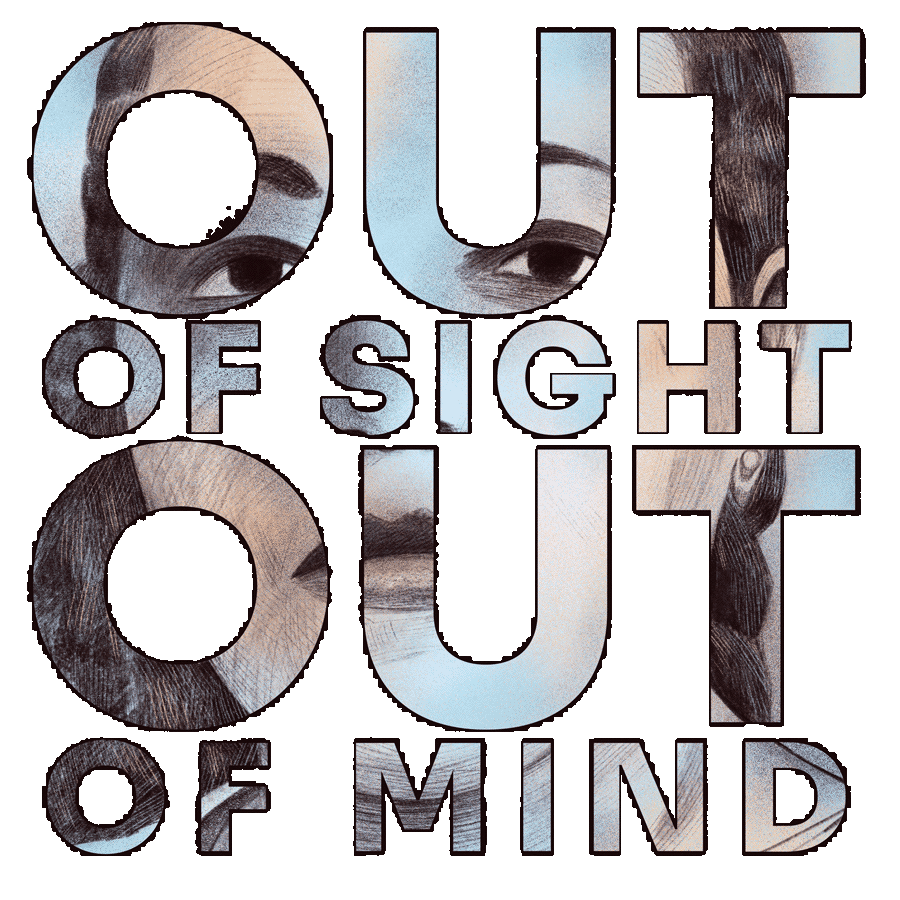
Out of Sight, Out of Mind is a new podcast series that brings their stories back into view.
Over the four part series, you’ll hear directly from the people who were forced to survive offshore detention on Naoero (formerly Nauru), alongside people who witnessed the system firsthand.
Together, their stories reveal the human impact of a policy that continues to this day.
Episodes
Episode 1:
Naoero Now

Through the first-person account of Ravi, who is currently living in Naoero, this episode explores what life is really like under Australia's offshore processing policy, why the system still exists, and how it has become a model copied by governments around the world.
Episode Transcript
Disclaimer: Since the time of recording, the formerly-known Republic of Nauru has changed its name back to the Republic of Naoero. All references in this episode occurred before the decision was made.
"Everyone we spoke to about Nauru mentions the rocks. All I could see around, it was big rocks. There was no actual ground. You were walking on rocks. So probably stones that would be, you know, around 10 to 20 centimetres. They were not like rounded and soft, you know, river stone kind of thing. They were sharp."
"They also mentioned the heat. It was hot. It was hot, like 40 or 50. Never seen in my life that kind of weather. Never. I never see the weather. Never in my life. Not even in Africa. That kind of weather I never see."
And for those living in Australia's offshore detention camps on Nauru, they also talk about the loss of hope.
"Because nobody here, nobody here want to hear my situation. Nobody want to look at my situation. It is up to you. You can die. No problem, no problem."
This is Out of Sight, Out of Mind. A podcast from the Asylum Seeker Resource Centre about the fight for change in Australia's attitude and treatment of refugees and people seeking asylum. Over the next four episodes, you'll hear from those directly impacted by Australia's offshore detention system. Stories of despair and hope. Human stories that live beyond the statistics and the media cycles. Because there is a better way.
I am Bahaa Dabbagh. I'm a refugee who left Syria 10 years ago with my cat Sasha. I'm also a refugee advocate living in Naarm, Melbourne. You might already know me from my stand-up comedy career, or my cooking classes, or from my podcast, Refugee Thoughts. This is episode one, Nauru Now.
In June 2023, three refugees are transferred from offshore detention on Nauru to Australia. The offshore detention center that Australia had set up a decade before was finally empty. The facility did not remain empty for long. A few months later, people were being sent again to Nauru. As of February 2026, there were nine people detained on Nauru and around 90 living in the community. After the closure of the Manus Island Regional Processing Center, Nauru remains as the only operational facility.
Before we go further, I feel like we should clarify something. You may have heard of the NZYQ cohort. This is the group who lived in Australia on a permanent or other type of visa and have had those visas cancelled due to a criminal conviction. This podcast is not about them.
This podcast is about the over 100 people who arrived by boat seeking asylum who are being kept on Nauru. It's also about the 700 people currently living in Australia on bridging visas, who, because they arrived by boat and have been in offshore detention in the past, have been told that they will never be able to settle here. It's about the thousands of people who spent time, often years, in offshore processing who are still living with the trauma they experienced. And it's about the people in the future who face a similar fate.
Because as former Labor PM Kevin Rudd said in 2013, people who come by boat now have no prospect of being resettled in Australia. The rules have changed. The key thing here is arriving by boat. This is what triggers a person seeking asylum in Australia to be sent to offshore processing. And Australian government, both Labor and Liberal, have maintained this stance.
This podcast is about those men, women, and children who, because of a cruel and inhumane government policy, are destined for a life in limbo. This podcast is about these people's strength and courage in the face of this treatment.
Picture this. Row upon row of demountable buildings set out in the baking heat of an equatorial sun. At first, it looks like some sort of cheap motel you'd see on a disused highway. But then you'd notice the fences. Few trees for shade, isolated from the main community by rock-filled and potholed roads, phosphate mines and jungle. Little support for the mental trauma already experienced during the flight from your country and the one you're going through now. No way to spend your days except ruminate on your plight and try to hang on to the small amount of hope that remains.
"In my background, in my country, I had problems."
Ravi is a young man, originally from Bangladesh, who sought asylum in Australia. We've changed his name and are using a voice actor to protect his identity.
"That time I decide I come to Australia by boat. So I come by boat. The police officers, they get us and they send us to Nauru. They said in Nauru we have detention centers. You guys go there for medical checkup and for our processing. They just put us in detention center for six months."
He's been in Nauru now for over two years. First as a detainee in Australia's regional processing center and then released into the community. He has little prospect of being able to settle in Australia.
"They treat us like animals. We are animals. We don't have any hope. We don't have any dreams. Like if we got any problem in Nauru... No one responds to that. Like if we have any problems like health problem, like legal problems here, we are helpless."
"I'm Maryam. I came to Australia by boat in 2013. After about two months around Christmas Island, we were transferred to Nauru."
At the beginning of May 2026, a Senate inquiry in Australia heard submissions detailing the many instances of neglect, systemic abuse and breakdowns in basic safety.
"You could hear children, every day you could hear children were crying and women are shouting. The food was very poor. Most of the time we were hungry. Kids were hungry. A lot of us lost weight. Myself, I went down to 40 kilograms at that time."
Shortly after the public hearings for this inquiry, the Albanese government pledged in its 2026 budget to allocate nearly $2 billion over the next four years to offshore processing. Over $13.5 billion has been spent by Labor and Liberal governments on offshore processing since 2012.
"My name is Bernadette McGrath and I'm the CEO of Overseas Services to Survivors of Torture and Trauma. All the time people are being held in conditions that… extremely uncomfortable, often didn’t meet their physical or mental health needs, didn’t provide adequate opportunities for employment, education, separation from family, and all the time not having any kind of end date."
Many of those who spoke at the recent Senate inquiry are calling for the end to these systems.
"The conditions that we've heard and our clients and people who we're working with directly tell us has been consistent over the last 14 years. This is Jana Favaro, Deputy CEO of the Asylum Seeker Resource Center. And of the 90 people who are currently working with, 95% are experiencing mental health conditions, 93% are experiencing physical health conditions. Our audit also showed that people are really, really scared and not knowing what is happening to them in their future, as people were told they were going there for a couple of months and they now have been on Nauru for over two years."
And while the political machinations continue, people such as Ravi continue to suffer.
"I don't have any choice. Please help us. Please try to do something for us."
The time spent in detention on Nauru was extremely painful for Ravi.
"I was detained in the detention center for five months, 20 days, something like that. In the detention center, it was very stressful. It is one room, like I cannot see outside and I cannot go outside without people's permission. You know, all the time in the one room."
Nauru is one of the world's tiniest independent states. Situated in the Pacific Ocean, around 40 kilometers south of the equator, its total land size is 21 square kilometers, which holds a local population of around 13,000 people. According to United Nations statistics, close to half of those under the age of 24 are either out of work or out of education or training. Nauru's economy is heavily reliant on foreign aid, including millions of dollars in support from Australia.
Internet and phone calls are expensive, making it difficult to keep in touch with loved ones. In his time in detention, Ravi's calls were heavily restricted.
"I want to see my family because I miss my family. I miss everyone when I am here. I told the security guys, I like to talk to my family. They said, no, you don't have permission to call."
And without contact with the outside world, there was not a lot to do to pass time and keep hope alive.
"Sometimes deep down, sometimes go round, sometimes talking with two other friends, sometimes all the night. I just block it out in the room."
Since being released from detention, Ravi has been living in the community in a one-room portable building, like the kind you would see on a building site.
"So here I have lots of problems in Nauru. Medical problem, financial problems, food problem. I have accommodation problems. I don't have a work permit. I cannot work in Nauru."
Without a work permit, Ravi is forced to live on the small amount the Australian government gives him in a fortnightly allowance. With Nauru highly dependent on food imports to feed its population, this allowance is barely enough.
"Every fortnight they give $260. But here the vegetables too expensive. Everything too expensive. Cabbage $16. A carrot $18. Tomato is $19. The chicken $12. The beef $24. Everything here expensive."
Ravi faces other difficulties too.
"It is very hard. We have the air conditioner. But sometimes we have an electric problem. The power goes out. Sometimes everything stops. Water, electricity. Over the 24 hours, the electricity goes out. When we buy something, we put in the fridge, the power goes out and the food is damaged. Every day they are just torturing me like an animal. I'm not an animal. They control my life. I don't like this."
"So my name is Paul Farrell, investigative reporter for about 15 years at The Guardian and at the ABC, and I'm currently working as a barrister in New South Wales."
During his time as a journalist, Paul Farrell wrote a lot about Australia's immigration policy and about the conditions in our country's offshore detention centres.
"We're talking about Nauru and offshore processing because it's happening again. The Labour government about two years ago saw fit to effectively reopen what everyone had assumed was the mothballed Nauru immigration facility."
"I think the other thing that's really shifted is the wave of populism that's swept the world and how that's impacted more broadly on conversations around migration. First Donald Trump, then Nigel Farage."
"Could Pauline Hanson be the next populist to win big? A Queensland senator flirting with the role of Prime Minister." "Would I be able to do the job? I believe I could."
"I think there's considerably less political resistance to… having these facilities on Nauru now because of what's happened over the last decade with Trump's rise."
"But all over the world, they're coming into our country from Africa, from Asia, all over the world. They're pouring into our country. Nobody's even looking at them. They just come in."
It's the waves of populism we've seen both overseas and here.
"Europe's immigration policies are facing the heat under pressure from far-right politics. There's also the possibility of member states to detain migrants and there's the possibility of member states to create return hubs in cooperation with third countries."
And the sort of increasing resistance to immigration that some Australians now feel.
"Anti-immigration protesters and a pro-Palestinian rally clashed on Melbourne's Bourke Street."
"Australia has developed a model that is being adopted internationally. The first flight will leave in 10 to 12 weeks."
Former UK Prime Minister Rishi Sunak directly referenced Australia's offshore detention policy as a model for his government's introduction of a similar system sending asylum seekers to Rwanda. And the success of this deterrent doesn't rest on one flight alone.
"It rests on the relentless, continual process of successfully and permanently removing people to Rwanda with a regular rhythm of multiple flights every month over the summer and beyond until the boats are stopped."
And the Trump administration has made deals with a number of countries including El Salvador and Equatorial Guinea to accept deported non-citizens.
"Our top story is from the Democratic Republic of Congo. The first set of US deportees have arrived in the country." This is part of Trump's third-country deportation deals with African nations.
Offshore processing has been maintained by successive governments in Australia.
"The reality is that both major parties have, for the last 15 years, considered offshore processing to be a bipartisan policy. I think the reason that they think that is because they've always been afraid of this issue of the specter of people arriving on boats and this darkness in the Australian psyche around that topic. And they've always been afraid that they will be punished by voters if they're not seen as tough on immigration, as tough on immigrants. And this policy is the real manifestation of that fear."
So is it worth all this to, quote, “stop the vote”? Because despite government efforts, people will still try to escape persecution in any way they can, no matter how dire the outlook. For people like Ravi, that desperate search for freedom has ground to a halt on a small Pacific island.
"We are refugees in Nauru, hopeless and dreamless. So we want to… We want to have a good life, a beautiful life. So here we are treated like we are animals."
The mission of organizations such as the Asylum Seeker Resource Center is to advocate for people such as Ravi who are powerless in this cruel system. Part of the ASRC's work is to give a voice to these very real people, to advocate for their rights to live, to work, to be treated humanely and compassionately.
"The ASRC people I really appreciate. They always try to help us and they always support us. They give good advice, good solutions, how to survive these situations. So I'm thankful for everything. I really appreciate everything the ASRC does. And I'd like to please request from the government to take all the refugees in Australia because they are good people and human people."
The ASRC, with refugees and people seeking asylum, continues to advocate for the end to mandatory detention. And your support for Ravi and people like him is critical for keeping hope alive.
"Please help us. I like to say to Australian people, support us and help us to get back to Australia. I just pray for that."
You can take action. Go to asrc.org.au/action.
Coming up in Episode 2:
We meet Bethlehem and Yasmin, two people who managed to survive offshore detention and a system that put women and children last.
"I feel like I shattered. Everything was shattered. My name was shattered. My religion was taken from me. My language was taken from me. So I feel like I was a cracked mirror. It's hard to collect all the pieces. I was struggling. I feel like a cracked mirror in Nauru."
Episode 2:
Women and Children Last
We meet Betelhem and Yasmin*, who were just 23 and 10 years old, respectively, when they were sent to Australia's offshore processing centre on Nauru. Through their stories, we hear what it was like to arrive on the island, survive years of detention and uncertainty, and rebuild their lives while continuing to live with the lasting impacts of offshore detention.
Episode Transcript
Disclaimer: Since the time of recording, the formerly-known Republic of Nauru has changed its name back to the Republic of Naoero. All references in this episode occurred before the decision was made.
“They start morning and the night time — they have a time, a specific time. Morning, after breakfast, they might have one before breakfast, or in the afternoon before dinner. You know, you can't arrange it — they will arrange it. The staff or the security have to arrange it. Not any time you get there — everything has a specific time.”
For people detained on Nauru, it's the simple things that can be the most dehumanizing.
“The showers — you line up to get a shower. Four people are going to the shower. Basics such as eating and washing: they turn on at the same time, they turn off at the same time. Within two or three minutes, they have to turn off. Anyone will line up, and you go once a day. You need your ID — without ID, you can't get a shower, because they're going to tick it off.”
The few minutes of relief come at a cost.
“No privacy at all. Any time — no privacy. Shower, toilet, everything — no privacy at all.”
And the time spent is determined by the security guard.
“You have to wait. As I said to you, in jail everything had a specific time. All your body is controlled by others.”
The impact of that time on the women and children detained on Nauru is still being felt.
“I feel like I shattered. Everything was shattered. My name was shattered. My religion was taken from me. My language was taken from me. So I feel like I was a cracked mirror — a cracked mirror. And it's hard to collect all the pieces.”
I am Bahaa Dabbagh, and this is Out of Sight, Out of Mind — a podcast from the Asylum Seeker Resource Centre about the fight for change in Australia's attitude and treatment of refugees and people seeking asylum. Today, the story of those most vulnerable and resilient under Australia's offshore detention system.
At the time of her arrival on Nauru in 2013, Betelhem was 23 years old.
“The boat we came from Australia — the boat looked very small, old and dirty. Very tiny, because we were 64 refugees on one boat, two pregnant, and eight kids, probably or more. I was the only one on the boat who was Ethiopian — different religion, different country, different language.”
The voyage by boat was dangerous.
“It's hard to sit down — you're squishing each other. You can't sleep because of the size. And it was frightening. It's very scary as a female, young, without any family — being different from others, wondering what the men are going to do to me as a human being. You panic. You don't have family, or a brother, or someone from your country to explain your situation to in the same language. That's the scariest part.”
Betelhem ended up in Darwin, where she was detained for five days.
“Within those five days, it was hard to understand where we were, what was going on — because after six days on the boat, your whole body is affected. I couldn't even walk properly, because we had been six days on the boat. I couldn't even stand up, let alone understand why I was going, or where I was going.”
On the sixth day, Betelhem was moved.
“They came in the middle of the night. Yeah — the security told us to take a shower and change our clothes, the same uniform, everyone wearing the same uniform. It was ten women, even one who was pregnant. They briefed us on where we were going, what was happening, and we signed. We don't know what we were signing, because it was a lot of paper at that time. It's hard to understand — the accent especially, I couldn't understand the accent. So we signed.”
In the darkness, Betelhem and the other people seeking asylum were taken by bus to the airport.
“Ten of us at the back of the airport — we walked straight in a line and got on a plane. We didn't see the airport or anything, because it was at the back of the airport. And on the plane was — it was the Nauru plane, and we saw other refugees on the same plane. One security guard next to each other. Yeah, but we didn't know where we were going.”
Hours later, the plane arrived on Nauru.
“Arriving in Nauru was the worst feeling I have ever had in my life. I just saw a lot of rocks around. And the weather shocked me a lot. And the tent — another shock too. The worst thing was... the families, they'd kiss, going around, running, and they were confused, and they were shouting. And they tried to go back to the plane, because by the time we arrived, some of them refused.”
Betelhem could hear the words people were speaking around her, but understood nothing.
“A different world — we were just so far from the world we knew. I thought I'd been sold as a slave or something. I thought I'd been sold to a smuggler. So — am I going to get sold? What's happening?”
And feelings of panic washed over her.
“It's very scary, because you're in another world, another planet — the population is different, the colour, the size, the language are different. So your eyes can't stop watching everything, what's going on — because you want to know, how can I escape? How can I go back to Darwin? How can I go back to the plane? Or how can I get help?”
Yasmin was 10 years old when she was sent to the Nauru Offshore Regional Processing Centre.
“We hopped on the bus with, I think, four to five security guards with us, just to escort us to the camp area. We were just sitting on the bus, you know, not knowing how to react, not knowing what to say or what to ask.”
She'd come from Christmas Island, where she'd already spent 11 months detained with her mother, father and younger brother, having fled persecution in Iran.
“We arrived at the facilities, and that's where they used to keep the refugees and all of the asylum seekers, in that area. It was really highly escorted, with long, massive fences.”
What Yasmin saw were rows upon rows of white marquee tents, like the kind you would hire for a wedding — some of them even had “Tawamba Party Hire” written on them.
“And the camp area wasn't around the shore. It was just located in the middle of the island — like it's in the middle of nowhere.”
The introduction to the camp felt frightening and chaotic.
“On entry to the camp there were a lot of security guards and security cars, a lot of people, and you were pretty much treated like an absolute criminal — like you didn't know what you'd done wrong to be treated like that. When we were entering the camp area, they put all of our stuff around on the floor, because they were searching us. I don't know what they were looking for — we were just transferring from camp to camp, what could we have? And there was this security wand — they used to literally scan every single person to make sure they weren't hiding anything in their clothes. It didn't matter how old you were, adult or child, you got searched regardless. So my first impression was, okay, I think this is the end of it — there's no way out of this horrible place.”
Yasmin and her family were taken to their accommodation.
“We had a caseworker and a few security guards escorting us to our — it's not a room, but our tent. And the tents were massive, big white tents, with, I'd say, five to six families next to each other in one tent.”
She and her family spent the next three to four years in Nauru's offshore regional processing centre.
“There was no privacy. There was no security — you could not feel safe whatsoever. I'd be walking alongside my parents, and all I could hear was the radios going off, the security radios. You almost felt like you were in a jail, being escorted from cell to cell, with their massive boots. The tent was white, and every room had one fan. A door — no door at all, but we'd get a sheet to make a door. And that door couldn't lock — anyone could come in at any time, because it was just sheets. So, yeah, no door at all. Families had one big room — if there were ten of them, all ten would sleep in it. And if it rained, the water might come in.”
The West Pacific monsoon hits Nauru from November to February, bringing strong westerly winds and heavy rain.
“We'd try to put our stuff on top of the bed, or next to my bed — I didn't want it to get wet. Sometimes when the weather got worse, we'd wet blankets and put them on the ground and sit on them, so at least we'd feel a little bit cooler.”
“So life was a little bit hard in Nauru, to be honest. I was in the tent — I lived there for 15 months. All the children — even the children — had no proper housing at all. Children, kids, all the people. Kids three years old. You'd see all the kids there.”
For years, Betelhem and Yasmin lived crowded together with others in tents.
“The shop, still, is the tent. The mess where you eat the food is a tent. The school is a tent. The only things that were proper buildings were the toilet and the shower, and the laundry — that's it. You can't see any houses — it's all tents and the fence. It was so steaming hot in the tent.”
“Over time it started to mould even more. So when you walked into the room, it was like walking into a steaming room — but not a normal steaming room like we have here in Australia. It was like walking into an absolute mould room. As soon as it hit twelve o'clock, you couldn't sit in the tent anymore. We would have had to leave, just outside the tent, and there were no trees or anything to sit under, no shade. You just had to leave to be able to breathe.”
It's barely imaginable for an adult in these conditions — but for a child?
“There was no safe place for us to play, or go, or even feel safe, because we were isolated with security guards and fences and rocks — and everything you did used to be noted. There'd be security guards sitting at the shower, the bathroom, the kitchen area — everyone's name was noted down, what they do, what their movements are. And one of the really horrible things was, we weren't called by our names — we were called by our boat numbers. I remember my boat number was B-L-O-27. They used to call me by that number all the time.”
“Our boat number was TAS — T-A-S — the boat number. That's what they give you. Everyone lines up, and in the order they line up, they get that number. I was in line 16, so I got TAS 16. My next friend was TAS 17. The other one was TAS 18.”
Even now, when Betelhem calls the immigration department to discuss her temporary visa, she's required to refer to this number.
Kids grow. They grow out of clothes. They grow out of shoes.
“Because of walking on rocks every single day for five years, we went through a lot of thongs — because they didn't last. Every time we asked the security guards, hey, can you get us some thongs, they'd say, okay, you need to fill out this request form and we'll send it to the higher management, and once it's approved we can provide you with some. And usually that would drag on for months — I'm telling you, months. I remember one time I didn't even have shoes, so I couldn't leave the tent, because I had nothing to walk on. And some kids — because it was a group of us — we just gave up on shoes and started walking barefoot on the rocks. It was a really horrible experience, not being able to access clothing or shoes to walk on.”
People detained on Nauru have spoken of wearing the same underwear for months at a time while they waited for clothing requests to be answered.
“Every family, every child, had to go through so much begging and requesting — which, now thinking about it, actually makes me really frustrated. The whole Nauru government was paid to keep us in that cruel place — the least they could do is provide us with some facilities so we could live day to day.”
People had to become resourceful, to provide just the basics for themselves and their families.
“I remember some people started making their own thongs in the camps — using tape and things like that to create something to walk on.”
During her time in offshore detention, Betelhem drew on her faith in God, and her friendships in the camp, to keep strong.
“All the Somalians — because we come from Africa, we understand each other, at least — and there were Iranians too. So they gave us a little bit of hope, and we tried to stay close to them. It made us a little bit better — gave us a little bit of hope.”
Betelhem also drew strength from her love for her family.
“I'm the oldest in my family. I have to live for them — at least, I know that. And the only hope they have is me.
After 15 months in detention, Betelhem was granted refugee status. This meant she was released into the small community on Nauru — a community with its own culture and challenges.
“The Nauru community detention looked like a movable house, no fence — anyone could drive a motorbike or a car in front of your house. Nighttime was the hardest part, because they told us that after nine o'clock we weren't allowed to go outside — for our safety, they said. No security at all. Especially for single women, it was hard for us. Community detention was worse than detention. For me, it was worse.”
When she was 15, Yasmin and her family were also given refugee status and released into the community on Nauru.
“You were kind of, like, set free — but set free from the actual camps, not set free from Nauru. You were still living on that island. But I think they realised there was no way for us to escape — it had been three, four years, they can't run away — so, you know, let them get their refugee status and move from the camps to actually be free, and start going out around the island, live with the locals, that kind of thing.”
The strain and trauma of her experience on Nauru caused Betelhem to be medically evacuated to Australia.
“I couldn't cope anymore, so I came to Australia for medevac — for medical reasons. As I say, I couldn't cope any longer. After five months, I couldn't take it — I got sick of it. I got mentally sick, physically sick.”
For two years after arriving in Australia, Betelhem was in and out of hospital. When she wasn't in hospital, she was in detention.
“Because if I'd stayed longer, I might have died. I might not be alive. That's the reason I came here.”
In 2018, after five years on Nauru, Yasmin and her family were also medically evacuated to Australia. Yasmin and her brother spent three weeks in hospital getting treatment for their mental health, related to their time on Nauru, before being released into community detention.
“Coming to Australia, it was like — oh wow, is this even real? Am I in the right world? It was as if I hadn't seen roads for a very long time — buildings, greenery, parks. It was just like... is this going to be temporary, or am I going to be sent back to Nauru?”
The hardest thing for Yasmin has been trying to make up for the years lost.
“English was a big thing for me. I'd lost pretty much all of my confidence as a child, because I wasn't able to speak perfect English — I wasn't able to get good marks because of my level of English. It was really, really difficult, and it took me a long time to adapt. And when I was trying my hardest to rebuild all those missing years, I started to pick up my confidence around Year 11. When I came to Australia I had to start from Year 10, learning English, trying to blend in with the other students. I remember one time, I had a teacher in Year 11 — it was the time when students would choose their subjects, their career, what they wanted to do at university. I was talking to this teacher, telling her — okay, if things go well, I want to do this, I want to become a lawyer. And she looked at me and said, “What makes you think you can get into university with the level of English you have?” — in front of the whole class. I could not even explain the feeling. After trying so hard to build my confidence, you can't understand how difficult that was for me. As soon as I heard that, it was like being gobsmacked — like, whatever I'd built, whatever I'd done, was just ruined in one sentence. It felt like going back to point zero again.”
Yasmin is living in Australia on a bridging visa, which means she cannot travel out of Australia, and her rights to work and study can be restricted.
“My family — there's five of us, four of us working full-time, and we pay taxes. Because I hear people say, oh yeah, you guys can go back to your countries, you're here to scam the government, get on Centrelink, take all the money. Well, let me tell you something — none of us are eligible for Centrelink. None of us are eligible for extra support. So if I lose my job, that's it — I've lost my job. There's no extra support system I can rely on until I get another one.”
While she does have the right to work, that can always be taken away. Her visa expires every six months, and she must apply to renew it.
“It makes me feel like I'm losing time again. It's like — okay, I wasted my childhood, and now I feel like my adulthood is getting wasted as well. It's like two generations being wasted. It just feels really frustrating.”
If there is a delay in the renewal of a bridging visa — which is not unusual — a refugee or a person seeking asylum can lose their right to work. If Yasmin wants to study, she must pay international student fees and has no access to government student loans.
“Time is ticking. I'm 24 — I need to be able to set up a career for myself, get further education, so I can have something. It makes it really, really difficult to build a future for yourself.”
While there are currently no women and children detained on Nauru, the legacy of the trauma lives on.
“And then they take your health, your time, your hope, your dream, your family — everything will be taken from you, one by one, one by one, one by one. Because they took it — for me — even though I have the potential. I like to learn. I like to do. I like to guide. I like to serve this world — to be a good thing for my country, for this country. And everything was taken. What's left to live for? Nothing.”
Despite what she has gone through, Betelhem draws on her inner strength to build a life in Australia. She continues to hope for a better future for herself and her young child.
“Yes, I have one child, yes. I just want to be free. Freedom is the best thing — it's sweet, it's just sweet. I just want to be a free woman. My mum was never a free woman. I'll never be — I just want freedom.”
The Asylum Seeker Resource Centre, over the last 25 years, has supported and advocated for thousands of women and children, both in regional offshore processing centres and in Australia. The ASRC operates Australia's longest-running detention advocacy casework service, the Detention Rights Advocacy Program, or DRAP. This program supports people subjected to offshore processing since the introduction of the Pacific Solution in 2001, and currently provides daily casework and emotional support to people in offshore processing on Nauru, and to the men who remain in Port Moresby after being transferred there by Australia over a decade ago. And you can take action as well — go to asrc.org.au/action.
In our next episode, we meet the ordinary Australians who have stood up and spoken out against the injustice of offshore detention, and for the rights of refugees and people seeking asylum.
“I think the turning point was realising it wasn't going to end. I realised it was getting bigger — it was going in a direction of deterrent political views and points, and I couldn't do it anymore. I felt complicit more than helping.”
Episode 3:
Blowing the Whistle
Nicole*, a humanitarian worker who spent two years supporting families detained on Nauru, and former Guardian journalist Paul Farrell reveal how whistleblowers, leaked documents and investigative reporting exposed the human rights abuses taking place behind the fences. Together, they tell the story of the Nauru Files and the people who risked everything to make sure the truth could no longer be hidden.
*Name changed to protect her identity.
Episode Transcript
This episode references trauma, self-harm and suicide. Please take care while listening.
"I tried everything in my power, my intellect and my experience to find a way to justify offshore detention, because I thought that would help. So if I can just find one reason why this is okay, then, you know, we can roll with that, and I can use that when people challenge it. But knowing what I know from a budget point of view, having been there, the impact on professionals having to work in that environment, there isn't actually one single thing that justifies it. I really say that with all my heart, because I've really tried. Sometimes we tell ourselves that the ends justify the means, to make ourselves feel better, to be able to face what we see."
And let me go back, first of all, to 2013, when I was previously Minister for Immigration.
"When I first came into that portfolio, the boats were at the highest rate they had ever been, and there was a real human cost in that. That's what successive governments have said about offshore detention. At that point, through what we did with our arrangements with Papua New Guinea and Nauru, that the only way to solve the so-called problem of people seeking asylum is offshore detention, we took the number of people who were risking their lives at sea by boat, in just three months, and cut it by ninety per cent. That would not have been possible without those arrangements. And sometimes it's easier to keep things secret than to have to justify them at all."
So what is the risk when actions taken in our name have been kept away from public scrutiny?
I am Bahad Abar, and this is Out of Sight, Out of Mind, a podcast from the Asylum Seeker Resource Centre about the fight for change in Australia's attitude and treatment of refugees and people seeking asylum.
"My fellow Australians, tonight I want to speak to you about a matter of great importance to all of us."
On the 19th of July, 2013, the Australian Labor Prime Minister, Kevin Rudd, announced his government's asylum seeker policy.
"From this point forward, asylum seekers who arrive in Australia by boat will be sent to Papua New Guinea for processing and resettlement. Australia will continue to have cooperative arrangements on asylum seekers with Nauru."
The Labor government signed a deal to set up offshore processing centres on Manus Island, Papua New Guinea, and on Nauru. People who came by boat now had no prospect of being resettled in Australia.
In September 2013, the Liberal government came into power, with Tony Abbott as Prime Minister.
"Our system is too soft, and we are in the business of toughening it up."
Operation Sovereign Borders was announced, a military-led border security operation designed to prevent boats carrying people seeking asylum from arriving in Australia.
"And I am never, ever going to apologise for stopping the boats."
Over the next few years, as more people were sent to Nauru and PNG, concerns were being raised about the appalling conditions people seeking asylum were being held in. A report from November 2013 by the UNHCR found that men, women and children were being held in
"arbitrary detention in conditions that do not meet international standards."
A report by the UN's Special Rapporteur on Torture found that Australia was violating the rights of asylum seekers on multiple fronts under the UN Convention. In March 2015, the United Nations Special Rapporteur on Torture found that various aspects of Australia's asylum seeker policies violated the Convention against Torture and Other Cruel, Inhuman or Degrading Treatment or Punishment. Mr Juan Méndez took issue with the detention of children, violence in offshore processing centres, and recent amendments to Australia's maritime powers.
At the time, Paul Farrell was a journalist with Guardian Australia.
"I'd been reporting at the Guardian for a couple of years on immigration detention matters. I was reporting on it during the Manus Island riots, and over a couple of years I'd been reporting on what had been happening on Nauru. Over that time I'd built up sources working across the immigration detention network. In 2016, I came across what ended up being the biggest story I ever worked on relating to the offshore detention system, which ultimately became known as the Nauru Files."
The Nauru Files are the single largest leak of documents from Australia's offshore detention system ever published: assaults, sexual assaults, bullying, blackmail, self-harm, and reports of a child with their lips sewn together. The Guardian had been leaked, by a whistleblower or whistleblowers, more than two thousand incident reports from Australia's Nauru detention camp.
"The Nauru Files first came to me in the way that many stories come to journalists, which is that someone I knew who worked on Nauru got in touch. They said they wanted to meet me and had something they wanted to show me."
The Australian government had maintained a regime of secrecy around its offshore detention centres, but, as the Guardian itself put it, the Nauru Files shattered that secrecy.
"This very brave person met me at a cafe, and she slipped across a USB stick and said, 'I think there's something on that you need to see.' I opened up these files, and what I saw was hundreds of incident reports from what had happened, from 2014 to 2016, at the Nauru Processing Centre."
The immigration minister at the time was Peter Dutton.
"Well, again, to comment on the ABC commenting on the Guardian reports..."
"Well, that's a bit unfair, I'm just asking you if the reports are true or not."
"What these reports were, were the witness accounts of the guards, the caseworkers, the teachers, the child protection workers on Nauru who were working there over that time. And they catalogued the terrible events that occurred there, that these people were bearing witness to: terrible events of self-harm, of assault, of uses of force, and terrible and shocking accounts of sexual assault and child abuse as well."
"But I think people should be a little more circumspect, because my desire, the government's desire, is to treat people with dignity, to take all of these issues very seriously and to act accordingly. And I'm not going to be defamed by the Guardian and by the ABC, because we are doing everything within our power to provide support to people."
The number of reports was staggering: more than two thousand incident reports were published from the Nauru Files, totalling more than eight thousand pages. More than a thousand of those incidents involved children, even though children made up only about fifteen to eighteen per cent of the people held in detention.
"So every day, I guess my role was to visit the camp, checking with families, and I had my own caseload."
We've changed her name and are using an actor to protect her identity. She arrived on Nauru in late 2013, but she's not the whistleblower Paul spoke to. She worked for an NGO supporting women and children in offshore detention.
"The families I was visiting every day and trying to support came from Syria, Lebanon, Iran, Iraq, Myanmar, Sri Lanka and Afghanistan. Lots of stateless families and children. There were lots of single-parent families, lots of single-dad families where mum had passed away or been killed, so in lots of families there were significant health concerns for one or more family members. Everybody had some level of PTSD. I worked with a lot of children who had survived kidnapping and been tortured in their country of birth, and ages ranged from babies to seventeen."
Nicole had come to Nauru after a stint working with people seeking asylum and refugees on Manus Island.
"My intentions and motivations for going to Nauru, to work alongside and support refugees and asylum seekers being detained, was essentially that I wanted to be a safe person for them, because I felt like, having worked on Manus Island, the feedback from families was that it was something that helped them get through the period of detention: having people who were actually able to listen to their stories without judgment of any kind, and consider their mental health needs and the support needs of their children. I had heard myself about families on Christmas Island, and, you know, that these people are really dangerous and deceptive and they're coming by the wrong means."
"We are determined to ensure that illegal boats don't get to Australia. What we do is we stop the boats by hook or by crook."
"It made me want to learn more, and see for myself, and figure out what was happening, to the extent that we're putting children in dangerous locations offshore."
Nicole remained on Nauru for around a year, working with families detained there in a fenced-off area of tents and demountable buildings.
"It really felt to me like they had chosen the most remote, out-of-sight, out-of-mind location, and that's where these families were detained. So to get there, it was on very rocky roads. They weren't really actual roads."
Nicole clearly remembers Nauru's landscape.
"Yeah, very rocky. So the actual ground is actual rocks, I guess, probably stones that would be about ten to twenty centimetres, not solid ground at all. So when you've got asylum seekers with mobility issues or small children, it's very unsafe, and there wasn't really any consideration given to what kind of footwear or mobility aids they were provided. The thongs didn't last very long, so when the kids' thongs would break, which they always did, you'd see them walking around the camp with their dad's thongs taped up or strung together, because the dads would give up their shoes before their kids would have no shoes."
She also clearly remembers the living conditions for detainees.
"It's ridiculously hot there, and these families are living in tents which are made from very thick plastic. They got very mouldy, and during the rain it was a risk for anyone with asthma or any other issues. There were no solid walls or doors, or cleaning of the tents, and they just managed as best they could. And I remember there would be periods, for example, where it would rain for weeks at a time, and the kids would be so scared that the whole island was going to sink. And so I think that there was the intent of placing people in a space where they didn't know how to get out, or they wouldn't have tried, because they didn't know where they were."
Nicole remembers the ever-growing number of incident reports she had to write.
"So I remember that every day we were writing reports based on concerns we had for specific incidents where there was a likelihood of harm. But one that really got to me was a single mum who had arrived on Nauru with a ten-year-old daughter. And, to be honest, this mum, when she first arrived, was so happy to be there, because where she had been, in Indonesia, they were both at risk of imprisonment just for being refugees. So she thought it was great that they were on Nauru — her daughter would go to school. It was completely low risk, on our radar."
"But then, as time went on and she realised the policies weren't going to change, and her daughter had to grow up as a teenager on Nauru, she started to become really anxious about that. And then she regretted her decision, because she felt like she'd placed her daughter at risk, in a country that might not be safe. And there was an incident, one morning, where we'd responded after she'd taken an overdose of medication. And, yeah, she was really surprised that she woke up."
The enormity of the situation began to dawn on Nicole.
"I think the turning point was realising it wasn't going to end. I realised it was getting bigger, it was going in a direction of deterrent, political views and points, and I couldn't do it any more. I felt complicit more than helping. Every time I came back from a rotation offshore, there were more tents, more babies, more kids, there was more distress, and the reality sunk in."
"And I think that's what happened for families as well. It wasn't going away, it was just getting — like, they were locking in more and more. It had become, well, really, what we're doing is bearing witness and taking note of the harm that's been done."
"Yesterday, the Guardian Australia published leaked files revealing the details of thousands of incident reports from the asylum seeker detention centre on Nauru. The files detail allegations of abuse against detainees, as well as episodes of self-harm."
On the day the Nauru Files were published, it was everywhere. The story was on the front page of the Guardian that morning when everyone woke up.
"I remember that we got in at 4am to publish the story on the digital page, and it just exploded. The story went all around the world — it was in the New York Times, it was on the BBC, it was on CNN. It really was one of those truly global stories, where Australia found itself in the global news, with this policy right in its frame."
"So I can now confirm that the government has reached a further third-country resettlement arrangement for refugees presently in the regional processing centres."
By this time, Malcolm Turnbull had taken over as Australia's Prime Minister.
"It was certainly the case that a few months after the Nauru Files were published, in October 2016, the government announced the US resettlement deal, where the United States government would begin taking people who were found to be genuine refugees from Nauru."
"It is only available to those currently in the regional processing centres. It will not be available to any persons who seek to reach Australia in the future."
The cruel system of offshore detention continues, as people wait — sometimes for years — for resettlement or for their claims to be processed. And under the current Trump administration, departures to the US under its refugee admissions program are closed, as is Australia's resettlement deal with New Zealand.
People who worked for government and NGOs in offshore detention all signed confidentiality agreements that they would not speak publicly about what they saw and experienced during their time on Manus Island and Nauru.
"At the time we published the Nauru Files, it was incredibly difficult to get information out about the offshore detention system. The government had put up this wall of secrecy — what it described as Operation Sovereign Borders — where anything that was an 'on-water matter', which apparently included anything happening on Manus and Nauru, was effectively shut down under this veil of secrecy. People who did speak out ran the risk of heavy penalties, including up to ten years in prison. It made it incredibly difficult to get any information through official sources about what was happening on these islands. The end result, though, was that so many people from within the detention system, who felt like they were seeing lies being told by the government about what was actually happening, did the right thing and started reaching out to journalists — contacting them, telling them about what was really happening in these facilities. So you sort of had this funny situation where the official sources dried up, but gradually information still started coming out, from very brave people who were prepared to blow the whistle and speak out about what they were seeing."
The legacy of her time on Manus Island and Nauru has stayed with Nicole.
"So it's now been, for me, twelve years, I think, since I left. At first there was definitely survivor guilt — I felt a lot of guilt for being able to walk away. I felt guilty for coming home and having hot showers, and things, when there were really good people locked away for no good reason."
She struggled to convey her experience to friends and family.
"The most common question I got was, 'Was it actually as bad as what you saw, what people are saying?' And, you know, the obvious answer is, well, it was worse. But then, trying to put that into words, I just couldn't."
And she struggled to reconcile the stories being told by politicians with her direct experience supporting people seeking asylum.
"Honestly, if anybody could meet the families that I got to spend my days with on Nauru, I don't think we'd be having this conversation, because they were just beautiful parents trying to do their best. I think that's what I really struggled with the most — how do you, when everybody else is sort of like, 'We have our own problems, and they came by boat, so they shouldn't be here,' — I just kind of shut down a little bit, because I thought, well, you haven't seen what I've seen. And it feels like really innocent people are getting used as political pawns."
"I think about the people in those incident reports all the time. I wonder about their lives, where they've ended up. I really hope that their lives are better than they were. I guess that's all you can really do, is just hope that their lives are better."
For people seeking asylum, the time spent waiting is one of the most difficult things to bear.
"Even if we did processing offshore, the bare minimum is that it should be very limited — like a few months, not a few years. And the harm is being done by it being unpredictable and indefinite. Because I think every refugee expects a level of screening, but what we're doing is so wrong, and in excess, and causing more harm to innocent people."
People are again being sent to offshore detention on Nauru, but the media reporting today is very different to when Paul was reporting on it.
"What's very interesting about this present moment is that no one's really talking about what's happening on Nauru right now. There's a real silence about it, and the system is sort of really working along in the background. I think what was different about the time of the Nauru Files is that you did have children on Nauru, you had families on Nauru, you had men and women on Nauru — they were refugees, they were people seeking a better life. So I wish, or hope, that Australians could do their own research and come to their own conclusions, because we're being fed this fear that people coming by boat pose a risk to us, and they really don't. They're psychologists, they're poets, they're artists, children and babies. They just want to have the same life that we all want to have. Having been in the camps with them, and sat with them in really dark times, I want the same for them."
The Asylum Seeker Resource Centre runs Australia's only, and longest-established, offshore detention advocacy programme, which provides casework, support and advocacy for people to have access to a basic safety net — housing, food and medical care. Over the years, the ASRC has led the way in getting hundreds of people evacuated from offshore detention centres in Nauru and Papua New Guinea, playing a pivotal role alongside legal, medical and advocacy partners.
The ASRC continues to put a spotlight on the appalling, inhumane conditions people are held in in offshore detention, to keep these people inside and in mind. To find out how you can take action, go to asrc.org.au/action.
In our next episode, we meet the people who prove that the antidote to despair is hope and action.
"I think it's only ordinary people who will make a long-term difference. If we get a different narrative here in this country about being decent, being kind, welcoming people — it's changing the narrative, it's getting people to understand that we are not talking about queue jumpers, we are not talking about terrorists. We are talking about ordinary people who've escaped from something, and they're here looking for help."
Episode 4:
Taking Action
This episode explores the power of hope over despair. We hear from refugee advocates, campaigners and people with lived experience about the grassroots movement that helped free children from Nauru, why community action matters, and how ordinary people can challenge injustice and create lasting change.
Episode Transcript
This episode references trauma, self-harm, and suicide. Please take care while listening.
At its heart, the Asylum Seeker Resource Centre champions a welcoming and compassionate Australia for refugees.
“But these people — to be honest, and honestly, I can say — they are the angels.”
A place where those seeking asylum are safe and are supported during their journey.
“And they still keep fighting for us. This is what makes us always strong and hopeful.”
In an Australia that celebrates its multicultural and Indigenous identity.
“And this is the reason that now I'm sitting with you guys, telling the experience.”
What you're hearing are the sounds of the Asylum Seeker Resource Centre in Footscray, Melbourne.
Every day, this place is full of people using the services that the ASRC offers — community lunches, food banks, medical checkups, legal advice. All services run to assist people seeking asylum toward a better future.
It's a place of connection and hope that founder and CEO Kon Karapanagiotidis says comes from a simple proposition.
“The mission of the Asylum Seeker Resource Centre is to not exist. It's to have an Australia where, when people come seeking asylum here, they are given the opportunity to find safety and freedom — to have a safety net that allows them to work, have healthcare, contribute and participate in the community while they go through that process — to not be demonised, politicised and dehumanised, and to have the opportunity to restart and rebuild their lives after they've fled war, torture and persecution.”
I am Bahaa Dabbagh, and today we ask: what does it take to stand up for what's right, to advocate when others can't, to build hope in what appears to be a hopeless world? This is Out of Sight, Out of Mind, a podcast from the Asylum Seeker Resource Centre about the fight for change in Australia's attitude and treatment of refugees and people seeking asylum.
Kon Karapanagiotidis is the CEO and founder of the Asylum Seeker Resource Centre. Kon is the well-known face of the ASRC. He founded the organisation 25 years ago, with what he calls a unique one-stop-shop model of supporting refugees and people seeking asylum in Australia.
“So the ASRC crosses two centres, in Footscray and Dandenong in Victoria, and provides everything from a full-scale community health centre, a community legal centre, food banks, social enterprises, women's empowerment programs, aid programs, housing programs, English classes, daily hot meals, material aid, nurturing and supporting young refugees to be leaders through our refugee youth leadership programs, to placing people who are allowed to study into TAFE, and those allowed to work into employment.”
The ASRC is also home to the longest-running detention rights advocacy program.
“Which, in its essence, is a program that provides everything over the phone, over whatever technology we can — advocacy, casework, emergency triage, advocating for people to have access to a basic safety net, housing, food, and most critically, medical care, as well as continuing to advocate for their medical evacuation.”
“We'll start with the government's announcement for the day — that a deal has been done, Catherine, it appears, to get the last of the kids off Nauru.”
One of the most successful campaigns the ASRC was involved in was the Kids Off Nauru campaign.
This is Reza, who at the time was living on Nauru with his wife and young family.
“We've been in this system about 13 years — waiting almost five years on Nauru, in detention, and about eight years living in Australia.”
“My name is Natasha Blucher. I'm the senior media and policy lead at the Asylum Seeker Resource Centre, and at the time we're talking about, I was the detention rights advocacy manager. The Kids Off Nauru campaign was one of the bigger campaigns we've done at ASRC. And I think we felt like we did it with our backs against the wall, because it was a really desperate situation. There were over 100 very sick kids on Nauru at that time, in 2018. We were doing our best, through legal means, to get them out, but it just wasn't working quickly enough. And we were terrified that at any time, a child could die. So we decided we needed to kick off this campaign, and we — I guess — campaigned for these kids' lives.”
Reza knew this experience firsthand.
“The kids — they need schools, they need playgrounds, they need respect, they need care. None of these things were on Nauru. So how do you think parents could manage their children's life, we can say. And they get sick as well — mostly, they've been mentally sick. And they try to harm themselves, and even suicide. It was a prison. So the big question was, for the children: why are we here? Why are we in the prison? Why are we in detention? Why do we have to face these things? Maybe us, as parents, as adults, we've been through some horrible experiences — but the kids have never been in this situation before. They thought, okay, the only way to finish this, to get out of this situation — because they had no power. When they look at me as a father, and I can't do anything for my children, when we can't take ourselves out of that system, out of that situation, they know we can't do anything for them. My son — he was a witness to the suicide of some young people there, aged five or six. So what do you think a kid at that age would feel, seeing something like that?”
What Natasha and other refugee advocates were seeing was an unfolding crisis.
“From our perspective in Australia, what we were seeing as workers was that there were so many families telling us that their kids were completely out of control in terms of their mental health — kids as young as seven, all the way up to eighteen, trying to overdose on medication, trying to swallow rocks, trying to jump off things, cutting themselves. It seemed like almost all of the children — I'd say, you know, it felt like 90% of the kids — were either talking about or seriously attempting to hurt themselves. There were also some kids who had something the doctors were calling resignation syndrome, where they just completely shut down and give up hope entirely — not eating, not drinking, not talking, not moving, until their organs start to shut down. It was like a wildfire — this contagion that was completely out of control.”
The news of what was going on with the kids on Nauru began to get more urgent.
“We had been doing case management over the phone for a while, with people in offshore processing in Nauru and Manus Island, so we were in touch with all of the parents. It was like we knew, because parents began to tell us. And it started slowly — it started with one kid, then there were two, and then a little later, three — and it built from November, December 2017 until, maybe, by March, April 2018, it was completely out of control.”
“No one had a phone, or any way to make contact outside the island at that time, because there was a ban on it in the detention centres. But some young people started finding ways to make a connection. There had been some people living out of the detention centre at that time, so there was much more chance to get connected, and we started telling people what was going on.”
“We had a WhatsApp number, and people would just text that number.”
And the government's response to what was happening?
“In terms of what the government was saying at that point in time — they were saying nothing publicly. We were working as hard as we could, with lawyers and doctors, to try to run cases, to get injunctions to remove those children from Nauru, so they could access the medical treatment they needed. And the Australian government was fighting us tooth and nail the entire time.”
“The Australian government's perspective was that these kids were doing this on purpose, to try to get to Australia — that it was some form of protest, or some sort of show, so that they could get themselves and their families brought to Australia. From our perspective, those kids had no idea what was going on. They knew that they weren't okay, that they couldn't cope any longer, and that they wanted to be out of the situation they were in — and they couldn't see any way out except to leave this world.”
Caseworkers and health professionals tried to keep news of what was happening from becoming public.
“It's a known risk in school communities, for example, that if a suicide attempt, or suicide, is talked about too publicly, with too much emphasis on it, it can have a contagion effect — and that can happen even without the involvement of the media. One kid completes or attempts suicide, and then others will try to follow. The advice was that, because this particular group of children was so tight-knit and so remote, and their mental health was already so deteriorated by that point, if it was talked about, it would get worse. So we did everything we possibly could to try to make sure it wasn't spoken about.”
Despite these efforts, the international media began to hear stories of what was happening on Nauru.
“Journalists in Australia became aware of what was going on, and it was just no longer possible for us to contain it. So the first story was published. And once that story was published, it became public, and more journalists were looking at the issue. It got to the point where we couldn't stop the media reporting on it any longer. So the ASRC said, well — it's out there, we don't have any choice. It's not happening fast enough, the kids aren't coming off quick enough using legal means — we've got to run a public campaign, and try to sway public opinion, to get the government to shift its position, because we couldn't get these kids out of the situation they were in quickly enough. We were so sure that we were going to lose one.”
At this point, a number of humanitarian organisations came together in collective action, as well as many brave people on Nauru who sent pictures of themselves and their children to be used in the campaign, despite the dangers of doing so.
“You can't run a campaign without pictures of the people that move the Australian population. And it was dangerous for people on Nauru to have their photos go out into the public. But we took the risk, because it was the only way to get out, or to find a solution, to be honest.”
“There were billboards on trucks. There was a digital campaign. There was a petition. There was a lot of media — and I think it meant that, for the first time, people in Australia could see these kids that we were locking up on Nauru, and they could see that those kids looked just like their own kids. And it was at that point, I think, that Australians said, oh, no — we've had enough of this. This is not okay. We can't be locking up children on a remote island and leaving them to die.”
What makes an advocate or an activist in this space is many different things.
“At the heart of our movement are the people who lead it — who are also refugees themselves.”
The people Kon is talking about include those we've heard from in other episodes, like Betelhem and Ravi.
“So you have refugees, first and foremost, leading our movement — who are such a critical part of it. There isn't a movement without them.”
Working alongside them are people who feel compelled to do whatever they can.
“Remember, there's a whole ecosystem here. What often draws their activism is, again, their own personal experience of meeting refugees who've been released from detention, or visiting people in onshore detention centres, and being so moved and shocked by the conditions. What has often mobilised people in those situations is pure rage, shock and anger at the injustice of it all, and a resilience, resourcefulness and willingness to be a voice, and to be an ally.”
Sister Brigid Arthur is one of these people.
“My name's Brigid Arthur, and for many years now I've been involved in advocating for, and trying to help, asylum seekers.”
Since the early 2000s, Brigid Arthur and the Brigidine Asylum Seekers Project, or BASP, have been working to support asylum seekers and refugees.
“Yeah, the Brigidine Asylum Seekers Project — we call it BASP. In, I think, the late 1990s or 2000, a small group of us became aware that immigration detention centres had been established to lock up people who'd arrived here asking for protection. Since then, we've helped many, many people — a lot of them with accommodation and practical support, like food and legal help, and so on. But we also advocate on behalf of individuals, and for changes to the whole migration system that covers refugees and asylum seekers.”
To advocate for people seeking asylum, Brigid says it's critical for people to be vocal.
“People's lives are precious, and to the extent that a country can help, then I believe every decent country should do so. I believe we do need to be seen to stick at this issue, doing all that we can, because the people themselves who are seeking asylum need some inner strength to keep going — and that's hard for them to sustain.”
Sister Brigid's motivations come from a place of humanity.
“I don't think we need any offshore processing. It doesn't make sense. It costs an awful amount of money, and it puts people through sheer torture — and it's supposed to act as a deterrent. But if people are really, really desperate, you have to make the deterrent pretty bad, to be worse than being threatened with death wherever they are. And we do make it very bad — and yet people still seek asylum, knowing that that is a possibility.”
For people kept in offshore detention, it's community that keeps hope alive.
“I can say, honestly, that the Australian people — I think at that time — stood against the Australian government's policy. They did, and they helped us. I can say we got the power, mentally, from the Australian people. And they did stop the government continuing the awful system, at least offshore. So now I can say the Australian people did a big job.”
“The government's position on children in offshore detention appears to have shifted in recent days.”
“And to be honest, we got to the point, at that time, that everything started to become public — the offshore news being more accessible in the media than before.”
“This is a humanitarian crisis facing children on Nauru, and it's a crisis that has been caused by the bipartisan lockstep of the Liberal National Parties and the Australian Labor Party, and their support for indefinite offshore detention.”
“I think the government got to the point where they lost control of keeping everything secret.”
“Why won't you get these sick children off Nauru?”
“Well, we are. We are. We've got over 200 children off Nauru. There are 52 still there.”
“So give us a timeframe — how quickly can we get them back here? Because it is a matter of urgency. They need to be back here for very specialised medical treatment.”
It was no longer an abstract concept.
“So, one by one, there were court injunctions to remove children from Nauru, and they were medevaced — on ambulance planes — to Australia, straight into hospitals. That was happening slowly at first, and then it started happening faster. More cases were being won, and the government was conceding in more cases, so it got to a point where there were planes with a number of families on them, and nurses and doctors, loaded up to bring them home.”
“But then — when the public campaigning gained so much momentum, and there was such a public outcry in Australia — I still remember receiving the front page, like a PDF of the front page for the next day, and it was the first time I'd heard the news. I got a text — it was an image of this front page, at 11pm at night — and it said, ‘Minister says kids will be off Nauru by Christmas.’”
“The federal government has confirmed plans to have all asylum seeker women and children off Nauru by Christmas. A number of families have already been quietly transferred off the island, and are reportedly being housed in Adelaide.”
“And I collapsed onto the floor, and then texted my team, and they got into an Uber and went to the pub at 11pm — because we knew that it was over. And then it was just plane-loads of families departing.”
“We moved to Australia in October 2018. I saw the news — even I saw on the news, at that time Scott Morrison was the Prime Minister, and he just said that there were no more kids in detention centres.”
“There were 120 kids at the beginning of 2018.”
“Yes — yeah, so they were all off by the end of that year. And I think it was a total of 120 kids, over 350 people in total.”
At a time when the news cycle can be overwhelming, we need to know that ordinary people can build change.
“I think it's only ordinary people who will make a long-term difference. Governments, we know, respond to pressure — that's one definite thing we know. And if we get a different narrative here in this country — being decent, being kind, welcoming people... I mean, most people don't go back very far in their ancestry to find someone who came from overseas, unless they're Indigenous. I know it's a truism to say we are a country of migrants, but we are — and at least some of those people came to escape various forms of persecution. So it shouldn't be hard for us to argue that, as much as we can, we should welcome people, particularly those who come to escape terrible situations where their lives are in danger.”
“Any action, no matter how small, can make a difference. I often have conversations with people about how you don't get overwhelmed when you see the scale of the inequality and injustice, and I always encourage people — especially young people — to make a positive difference somewhere. When I talk to people who donate to us, and I ask them whether they're donating $10 or $10,000, I ask, why do you give to us? And they say, for many, it's an act of protest. I say to people, go and volunteer, get involved. Over the last 25 years, I've seen people make that difference — from doing a food drive, to kids doing a lemonade stand or a read-a-thon. I always say to people, the most important thing you can do is not be a bystander — it's to care, and to show empathy and love. Because the antidote to despair is hope. Hope is different to optimism, where we think, well, no matter what, something good's going to happen. Hope means doing something — doing something to try and make it happen. And so asylum seekers are looking to us for hope. If they come to us saying, this is a desperate situation I'm in, then they hope that they will get some practical help. But they also hope, I think, that we will give them some sense that all is not lost.”
“Change is incremental, and a lot of the time we can feel like we're not winning. But I look at even whatever the polls are showing you now, and I don't think that reflects most Australians. So we're always moving forward — it's never as fast as people need or want, but don't lose sight of that. I remain optimistic and hopeful, because you must — you have to.”
“I think if you look at the history — for thousands of years — the people who seek refuge and asylum have always been welcomed, anywhere in the world, because it's about human beings, about life, about the future.”
Find out how you too can take action — go to asrc.org.au/action. If you liked this podcast, please share it with your friends and family. You can also leave a review — it helps others find us.
This series was presented by me, Bahaa Dabbagh. It was produced by Camilla Hannan, with the Asylum Seeker Resource Centre. The theme music is by Sakal. Special thanks to Kat Nadel, Yasmin Hosseini, Heidi Abdurraouf, Natasha Blucher, Ryan Townley-Jones, Ogi Simic, Jana Favaro, Emily Howell, Barad Ali Batur, and Janek Rogers, and the broader ASRC team for their contributions. Deepest gratitude to all the people with lived experience of detention, and to the refugee advocates who contributed to this podcast.
This podcast was made on the sovereign lands of the Wurundjeri, Woi Wurrung and Boon Wurrung peoples of the Eastern Kulin Nation.
You’ve heard their stories. Now what?
You've heard their stories. Now what? The Australian Government’s offshore detention system relies on people not knowing and not caring about what happens behind the wire fences.
The more people understand the impact of this policy, the harder it becomes to ignore.
If this podcast moved you, here are some simple ways you can help build support to end offshore detention.
Host a listening club
Invite a few friends, family members or colleagues together, play an episode, and have an honest conversation afterwards. We've created a simple guide with everything you need to host your own Listening Club.
Sign the petition
Thousands of people are calling on the Federal Government to provide permanent protection to people who have already spent years in limbo. Add your name to the petition today.
Email your MP
Today, around 700 people who survived Australia's offshore processing regime remain trapped on temporary visas, with no pathway to permanency despite having rebuilt their lives here. Write to your MP today and call on them to let them stay for good.
Help more people hear these stories
Offshore detention has remained hidden for too long. If this podcast helped you better understand what people have experienced, please share it with someone else.
Every conversation helps break through the silence surrounding Australia's offshore detention system.
Share this page:
With thanks to:
* Names changed to protect their anonymity
Host:
Bahaa Dabbagh
Producer:
Camilla Hannan
Original music:
“Turn Me Up” - SAKAAL (@sakaal__)
Cover artwork:
Stacy Gougoulis
Voice actors:
Barat Ali Batoor (voice of Ravi)
Heidi Abdel-Raouf (voice of Nicole)
Special thanks:
Ravi*
Yasmin*
Betelhem
Nicole*
Cat Nadel
Yasmine Hosseini
Heidi Abdel-Raouf
Natasha Blucher
Ryan Townley-Jones
Ogy Simic
Jana Favero
Emily Howell
Barat Ali Batoor
Janak Rogers
Out of Sight, Out of Mind is a production of the Asylum Seeker Resource Centre (ASRC). To support this work visit: donate.asrc.org.au